Applications » Ceramic » Aerospace & Defense
3D Printer for Aerospace and Defense
Produce lighter components with reduced inventory using ceramic 3D printers. Technology driving advances in aerospace and defense.
Ceramic 3D printing with Prodways’ CERAM PRO series, powered by MOVINGLight® technology, enables aerospace, defense, and robotics industries to create complex, lightweight components with exceptional precision.
This technology cuts development times and reduces costs by eliminating traditional manufacturing limitations, such as tooling and labor. Aerospace applications, including turbine cores and specialized components, benefit from advanced designs that improve performance and efficiency, all while meeting the sector’s high cost pressures and technical demands.

Lower costs: Minimize inventory and reduce the expense of traditional production tooling.

Accelerate innovation: Produce fast prototypes and lightweight, complex ceramic components.

Flexible research: Use an open-material platform to develop specialized ceramic materials.
Specific applications of 3D printing in design, prototyping, and production for aerospace.
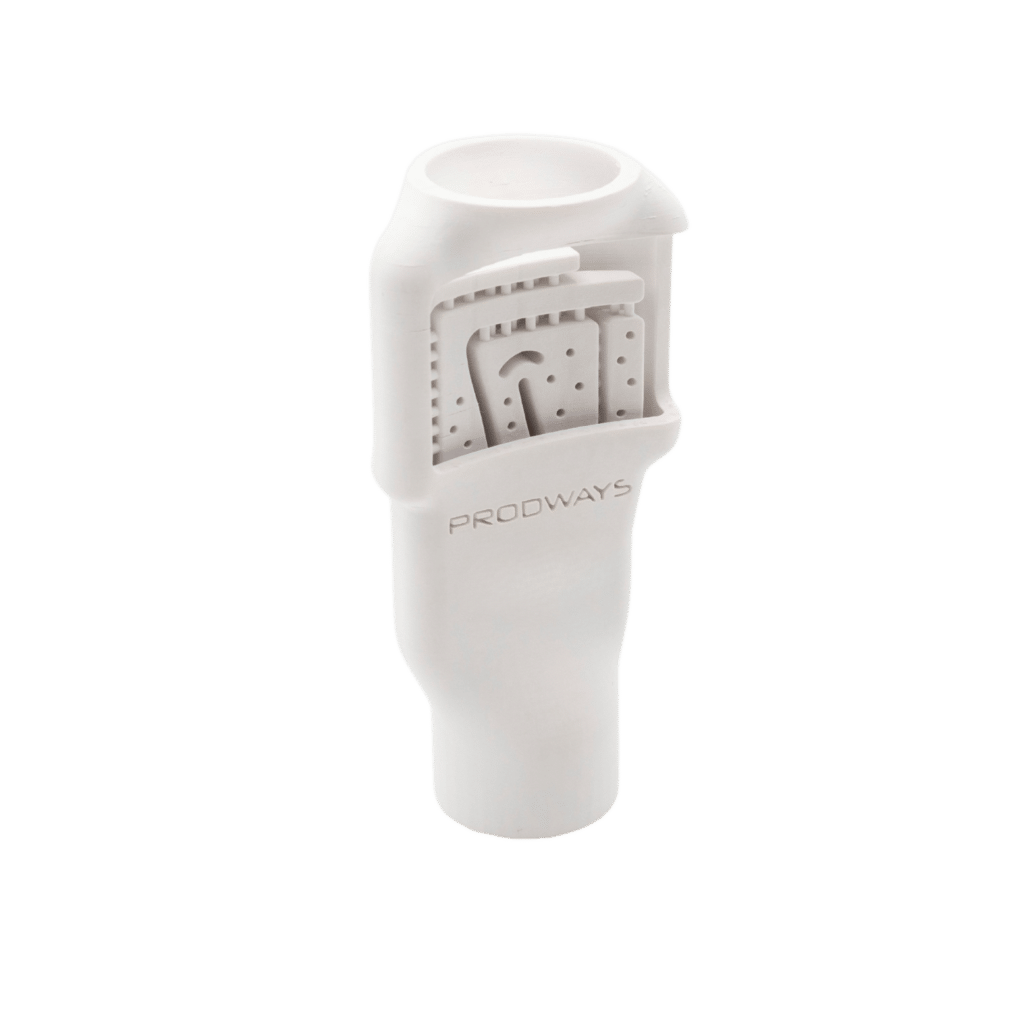
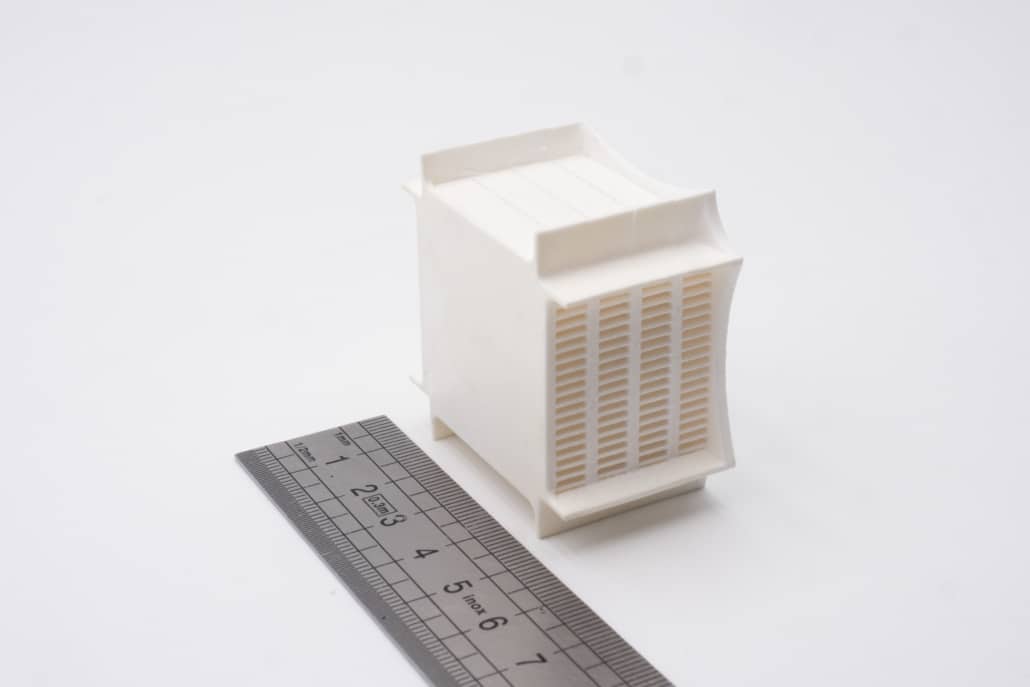
Prodways’ CERAM PRO series enables both small-batch production and scalable industrial manufacturing of ceramic parts, allowing the creation of intricate, lightweight designs for aerospace. 3D printing makes it possible to produce high-performance turbine cores, optical instruments, and other complex components that traditional methods cannot achieve.
By leveraging digital warehousing, manufacturers can print parts on demand, reducing inventory requirements and ensuring timely delivery of the right components. This capability supports flexible production at any scale, from prototypes and limited runs to full-scale industrial series, providing significant cost savings and operational efficiency in fast-paced industries where performance is critical.


The CERAM PRO series from Prodways uses advanced ceramic 3D printing, based on patented MOVINGLight® technology, ideal for applications requiring high mechanical performance and dimensional stability. In the aerospace and aviation sectors, discover the CERAM PRO range of 3D printers to meet your most demanding needs.
Contact Prodways with this form. We’ll help you select a 3D printing solution and estimate your return on investment.

3D-printed ceramics are revolutionizing the aviation and aerospace industry by enabling Ceramic Turbine Parts for Aircraft Engines, which offer high thermal resistance and lightweight performance, specifically designed for 3D printed for aerospace applications.
From Engine & High-Temperature Applications to advanced Aerospace Prototyping with 3D Printed Ceramics, additive manufacturing allows engineers to create complex shapes that were impossible with traditional manufacturing methods.
For specialized projects, Low-Volume Production of Aerospace Ceramic Components ensures custom, high-performance parts can be delivered efficiently.
3D printing, using 3D printers for aerospace, improves the efficiency of aerospace manufacturing by reducing part count, eliminating tooling, and shortening development cycles. It enables the production of complex, lightweight parts in a single build, reduces assembly errors, supports on-demand production, and lowers inventory and lead times, resulting in faster innovation, lower costs, and more reliable production.
For aerospace prototyping with 3D printed ceramics and industrial use, manufacturers rely on high-performance technical ceramics such as alumina, silica-based ceramics, and silicon carbide.
These materials offer a rare combo: low weight, high mechanical strength, chemical resistance, and exceptional stability at high temperatures. That makes them ideal for turbine components, thermal shields, optical systems, and structural parts exposed to extreme conditions.
The aerospace industry is moving toward increased use of production-grade additive manufacturing, digital spare parts inventories, and material specialization. Ceramic 3D printing and 3D printers for aerospace will play a growing role in high-temperature and high-stress applications, enabling lighter designs and improved system efficiency. Automation, certification of printed parts, and the integration of additive manufacturing into full production lines will further establish 3D printing as a core industrial technology, not just a prototyping tool.
Ceramic turbine parts for aircraft engines are 3D-printed components that can withstand extremely high temperatures while reducing weight. They are used in modern aircraft engines to improve efficiency and durability.
Engine & high-temperature applications refer to parts of aircraft engines, such as turbine blades, nozzles, and thermal insulation, that require materials resistant to extreme heat. 3D-printed ceramics are ideal for these demanding conditions.
Aerospace prototyping with 3D-printed ceramics allows engineers to rapidly create functional prototypes of engine parts, satellite components, and other aerospace structures. This method reduces development time and costs compared to traditional manufacturing.
Low-volume production of aerospace ceramic components refers to small-scale manufacturing of custom parts using 3D-printed ceramics. This is ideal for specialized aircraft components or test parts where mass production is not required.

 Customer Support
 Request Sample
 Contact